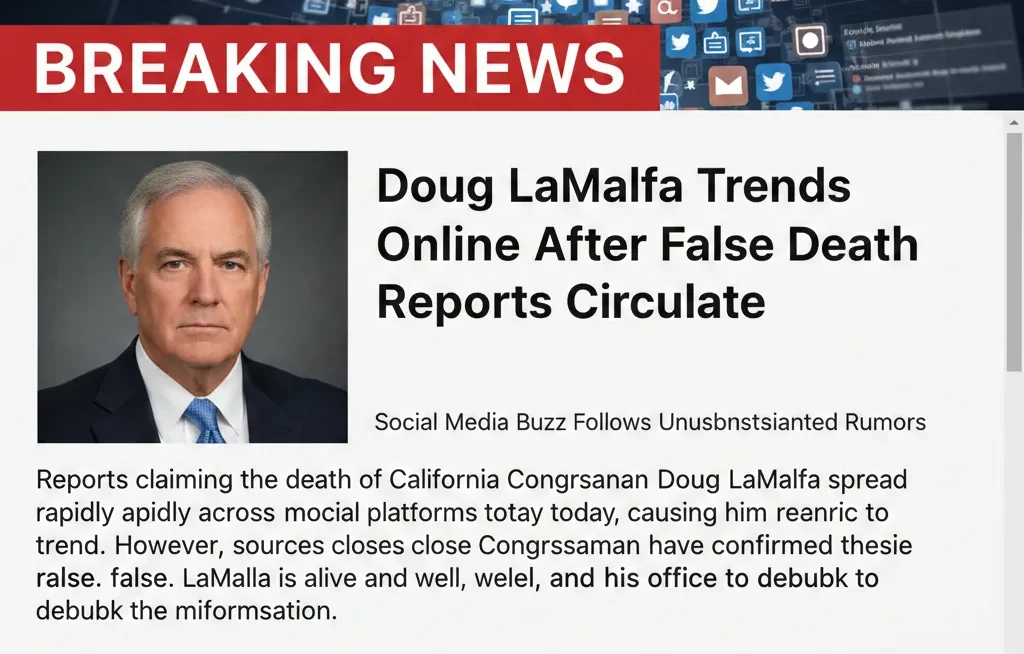
Social media lit up Tuesday after false reports claiming the death of Doug LaMalfa began spreading online. The unverified claims moved fast across platforms, triggering confusion, concern, and a sudden spike in searches as people tried to figure out what was really going on.
How the Rumor Took Off
The reports appear to have started with a handful of unverified social media posts that offered no sources, links, or official confirmation. Even so, the claims gained traction quickly. As more users saw the posts, LaMalfa’s name began trending, pulling in people who were simply looking for answers.
Many users took to social media asking, “Is this real?” while others warned that the story looked sketchy. No major news outlet reported the claim, and none of the posts included statements from LaMalfa’s office or family. Despite that, the rumor continued to circulate for hours before being widely dismissed.
No Evidence to Back the Claims
As of the latest updates, there has been no confirmation from Doug LaMalfa’s congressional office or any credible source suggesting a medical emergency or death. Journalists and political observers have since labeled the reports as false, pointing to the complete lack of verified information.
This kind of situation isn’t new. Public figures are frequent targets of death hoaxes, often sparked by parody accounts, misinformation campaigns, or simple misinformation that snowballs out of control. Once a name starts trending, rumors can take on a life of their own.
Why Death Hoaxes Go Viral
Media analysts say death rumors spread so quickly because they hit people emotionally. Shock factor drives clicks, shares, and comments, which pushes the topic even higher in trending feeds. Before long, users are reacting to the buzz rather than the facts.
Algorithms also play a role, boosting content that gets engagement whether it’s accurate or not. By the time corrections show up, the rumor may already be everywhere.
What Happens Next
Most observers say the situation is effectively settled due to the absence of any credible reporting. Still, the incident is another reminder of how fast misinformation can spread online.
Experts continue to urge users to slow down, check trusted news sources, and avoid sharing unverified claims. In today’s digital news cycle, waiting for confirmation isn’t just smart it’s necessary.